Fifty-one feet of heavy-displacement fiberglass, designed by William Garden and built in Taiwan. The kind of boat made to cross oceans slowly and arrive anyway.
Formosa 51, as a class
| Designer | William Garden |
|---|---|
| Builder | Formosa Boat Building Co., Taiwan |
| Years built | 1973–1982 |
| Rig | Ketch (cutter-ketch common) |
| Hull | Solid fiberglass, 1¼ in below the waterline |
| Keel | Long keel |
| LOA | 50 ft 10 in |
| Beam | 14 ft 2 in |
| Draft | 6 ft 6 in |
| Displacement | 40,000 lb |
| Ballast | 15,000 lb encapsulated iron |
| Rig dimensions | I 54.7 · J 18.3 · P 48.3 · E 19.0 |
| Sail area / displacement | ~14 |
| Comfort ratio | 50+ |
| Typical passage speed | 6–7 kn |
The Formosa 51 as drawn
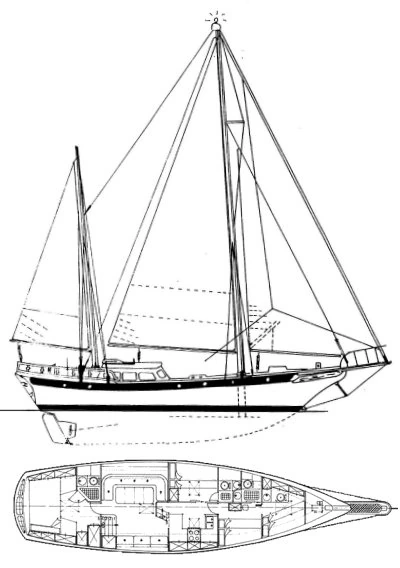
Ketch rig over a long keel, and the accommodation below. You can see the shape of her in the profile — deep forefoot, long run aft, and an outboard rudder on a full keel.
In English
40,000 lb on fifty feet is heavy. She carries 15,000 lb of that as encapsulated iron in a long keel, which is why she stands up to her sail and why she doesn't slam.
A sail-area-to-displacement ratio around 14 means she is not quick. Six or seven knots is the honest number. In exchange you get a boat that tracks, that can be left to steer herself, and that doesn't need reefing every time the wind shifts.
An inch and a quarter of solid glass below the waterline. Nobody builds like that now because nobody needs to pay for it. It's the single biggest reason these boats keep turning up having circumnavigated.
Sassafras River, Chesapeake Bay
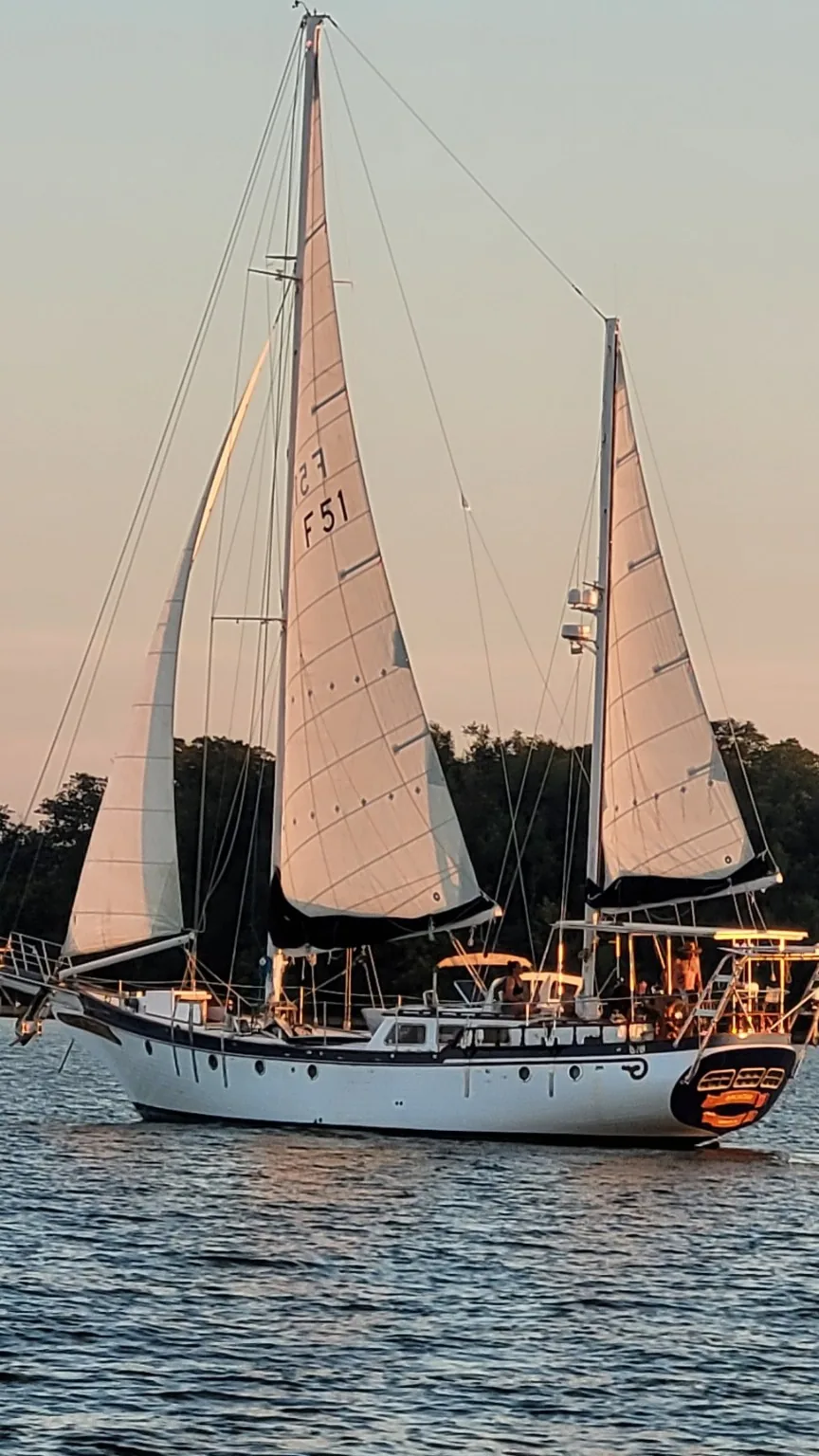
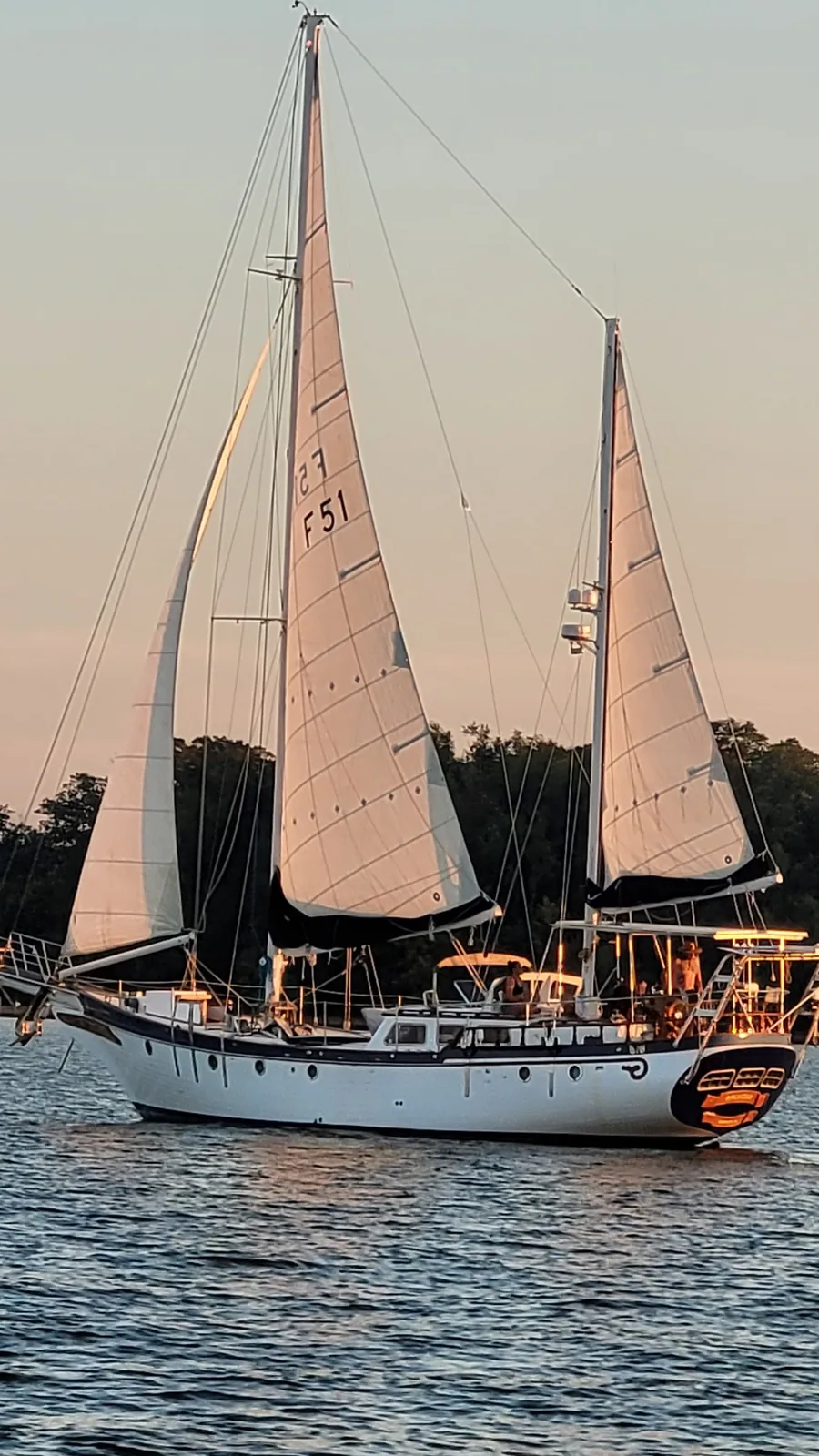
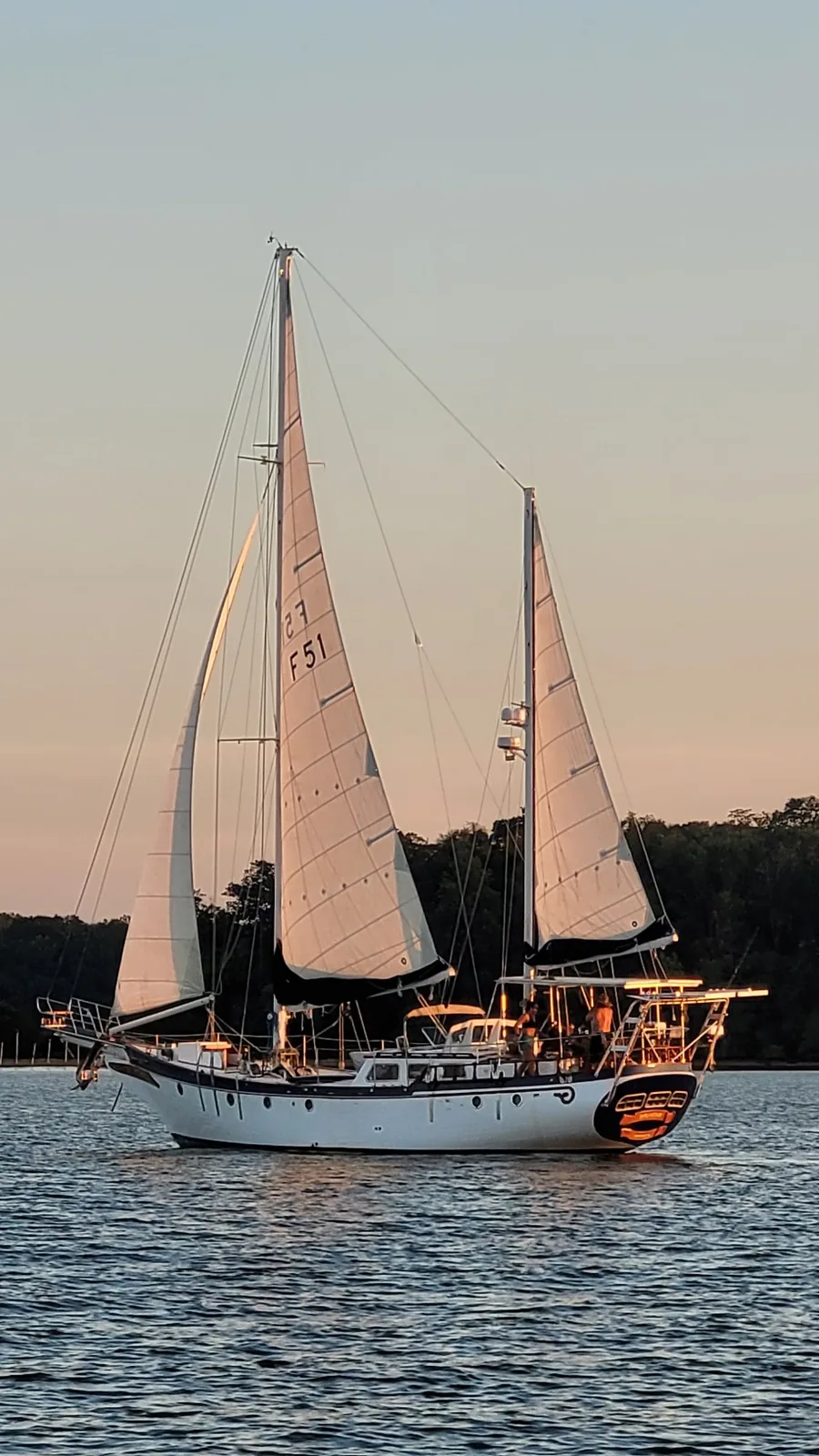
Main, mizzen and headsail. Fifty-one feet of her, doing what she was built to do.
 Exodus